teaching
teaching
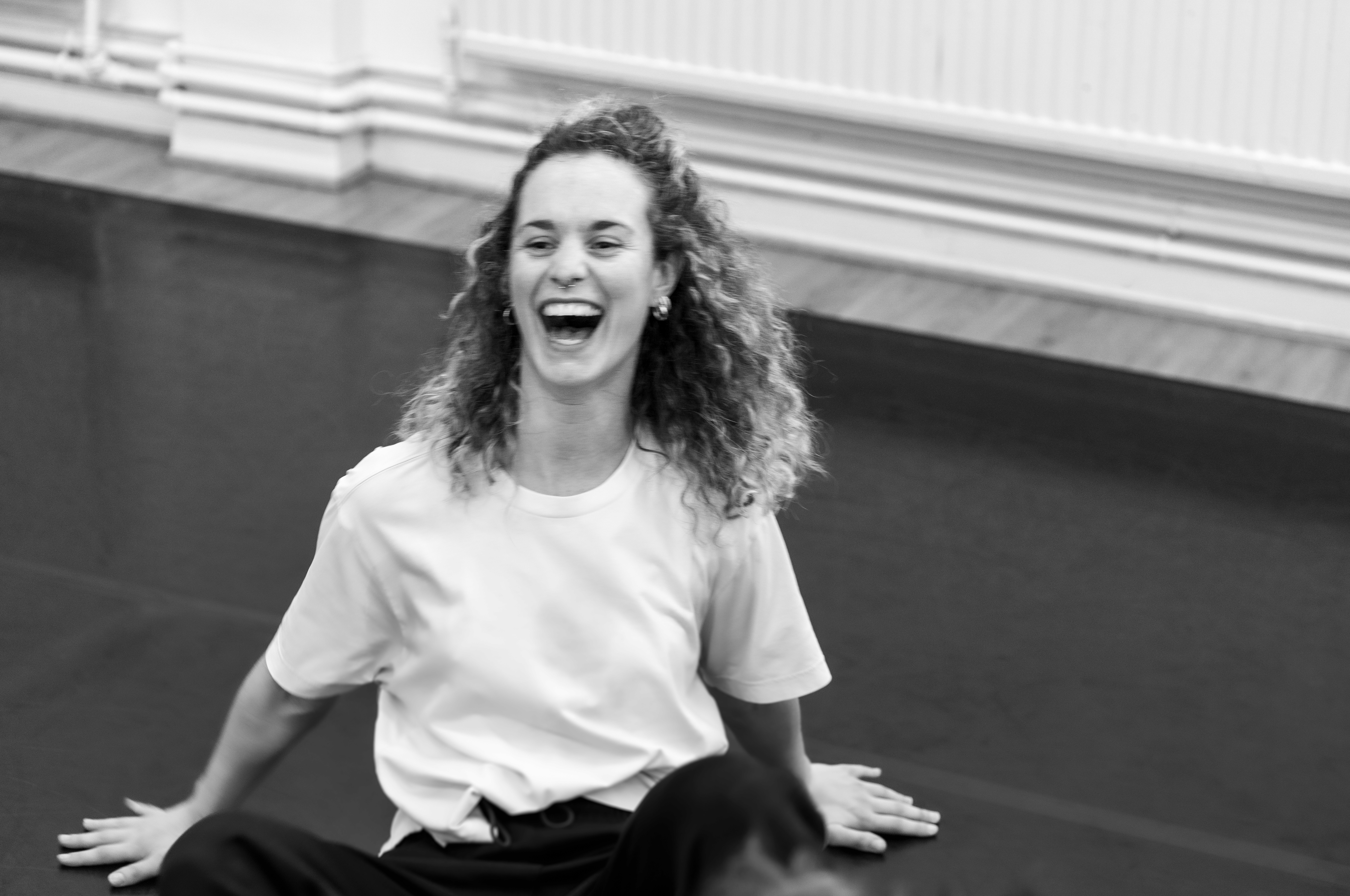
Alongside dancing and performing, Sara is passionate about sharing her practice. She leads improvisation and creative workshops for participants of all levels, as well as contemporary technique and professional training.
Training
Sara’s classes are energetic and challenging, offering a wide range of tools to navigate the floor, spiral in and out of movement, travel through space, and build precision, stamina, and connection, within the body, to the space and to others.
The work focuses on activating and challenging the body while engaging with artistry and imagination.
Sara’s experience as a dancer has led her to develop a class structure that supports technical, mental, and physical preparation, helping performers get ready for shows or creative projects.
Since 2023, Sara has been training handstands with Jamie Jeffery, gymnastics coach in London. She enjoys incorporating inversions and hand-balancing exercises into her classes, opening up new possibilities within the body and offering new pathways for the nervous system.
Alongside dancing and performing, Sara is passionate about sharing her practice. She leads improvisation and creative workshops for participants of all levels, as well as contemporary technique and professional training.
Training
Sara’s classes are energetic and challenging, offering a wide range of tools to navigate the floor, spiral in and out of movement, travel through space, and build precision, stamina, and connection, within the body, to the space and to others.
The work focuses on activating and challenging the body while engaging with artistry and imagination.
Sara’s experience as a dancer has led her to develop a class structure that supports technical, mental, and physical preparation, helping performers get ready for shows or creative projects.
Since 2023, Sara has been training handstands with Jamie Jeffery, gymnastics coach in London. She enjoys incorporating inversions and hand-balancing exercises into her classes, opening up new possibilities within the body and offering new pathways for the nervous system.
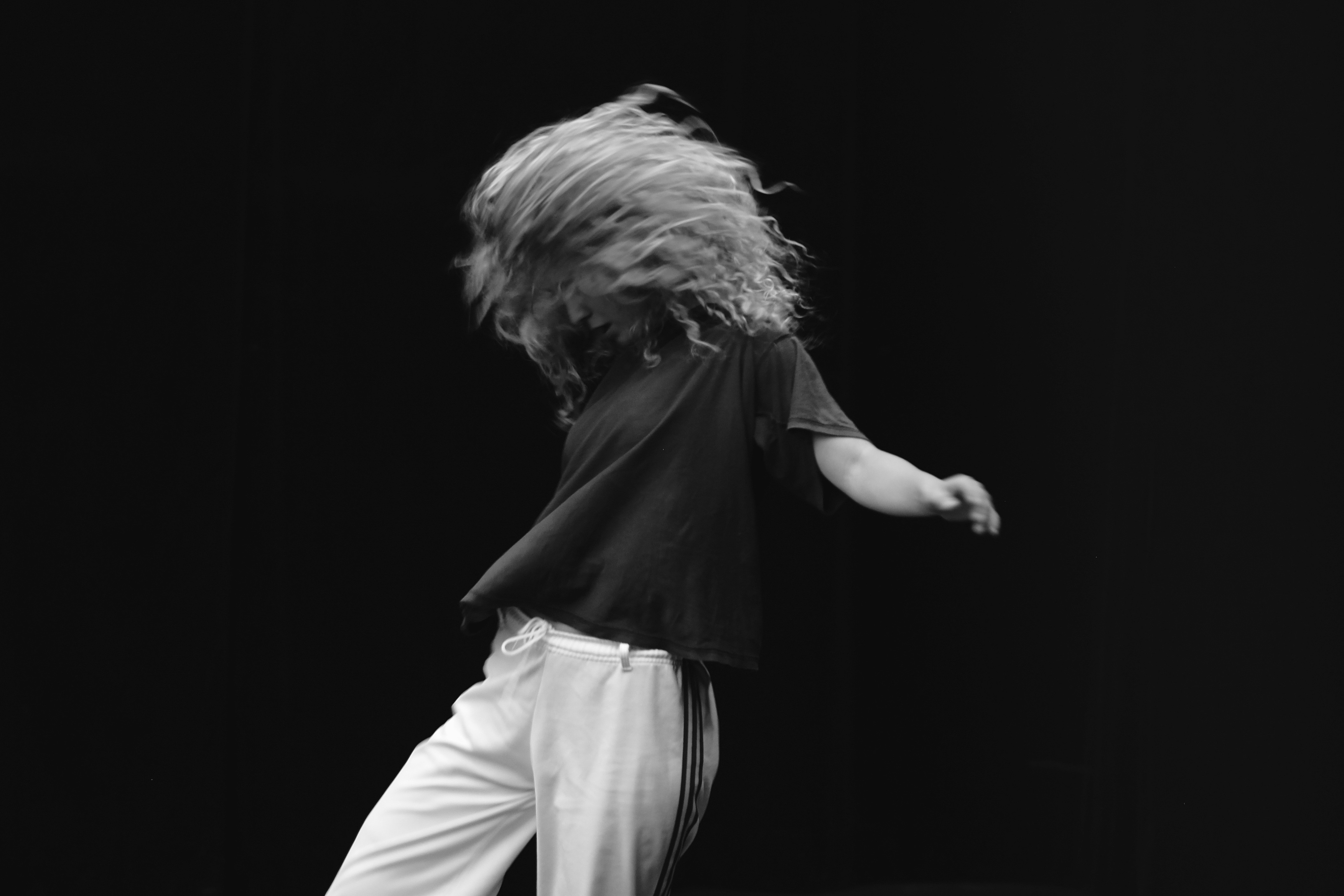
Sara’s practice is rooted in improvisation, durational tasks, and creative writing as tools for generating choreographic material and translating conceptual ideas into embodied action. The practice encourages dancers to approach movement as a form of research, where attention, physicality, presence, and sustained focus become central to the creative process. Through structured improvisation and reflective exercises, students are invited to explore how physical sensation, imagery, and language can inform movement generation and compositional decision- making.
Sara also draws on principles from the Michael Chekhov technique to support performers in connecting inner impulses with physical expression and expanding the expressive range of the body. Drawing on her own experience within durational and interdisciplinary performance contexts, Sara is particularly interested in how performers cultivate endurance, sensitivity to time, and heightened awareness of space. In the studio, this translates into practices that support deep listening, experimentation, and the development of individual artistic voices. Sara aims to create a learning environment where curiosity and risk- taking are encouraged, and where dancers can engage critically with their own creative processes. The approach is informed by practice-as-research methodologies and collaborative modes of working, supporting students to develop choreographic material through embodied inquiry, reflection, and dialogue.
CREATIVE PRACTICE
Sara’s practice is rooted in improvisation, durational tasks, and creative writing as tools for generating choreographic material and translating conceptual ideas into embodied action. The practice encourages dancers to approach movement as a form of research, where attention, physicality, presence, and sustained focus become central to the creative process. Through structured improvisation and reflective exercises, students are invited to explore how physical sensation, imagery, and language can inform movement generation and compositional decision- making.
Sara also draws on principles from the Michael Chekhov technique to support performers in connecting inner impulses with physical expression and expanding the expressive range of the body. Drawing on her own experience within durational and interdisciplinary performance contexts, Sara is particularly interested in how performers cultivate endurance, sensitivity to time, and heightened awareness of space. In the studio, this translates into practices that support deep listening, experimentation, and the development of individual artistic voices. Sara aims to create a learning environment where curiosity and risk- taking are encouraged, and where dancers can engage critically with their own creative processes. The approach is informed by practice-as-research methodologies and collaborative modes of working, supporting students to develop choreographic material through embodied inquiry, reflection, and dialogue.